Our Digital Nation: Prensky and Boyd Post
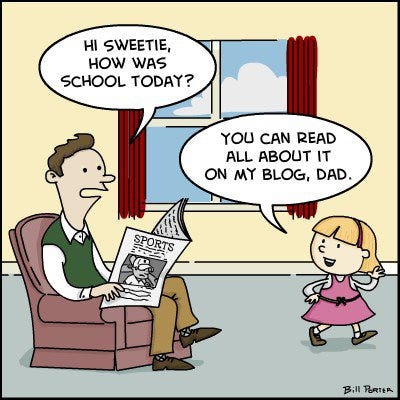
I want to start my entry with this comic. I like how it plays on the idea of a digital immigrant being portrayed as someone who uses older media like newspapers to receive information and a digital native is someone who shares their information solely online. I don’t believe that children, for example, under the age of 5 or 6 are doing this with tech, however, I would be very impressed if a very young learner had a blog. I feel this jokingly displays what Marc Prensky argues is the two groups that make up our digital society, digital native, and digital immigrants.
Prensky had this idea about because young people are born in the tech-savvy world we know today then that makes them a digital native and on the flip side, the older generations are considered the digital immigrants. I found Prensky's Metaphoric comparison between the two groups interesting because I can see where these two ideas can be played out.
I retype the comparison Dr. Bogad discussed the slide as a refresher.

Dana Boyd argues that just because you were born in a tech-savvy world doesn’t mean your tech-savvy yourself. There are other factors to be considered when it comes to being media literate. Being media literate can not be narrowed down to just one medium of information. Our youth today may not know what it’s like to learn from or know what an overhead projector is, but they may also not know how to use the available technology today to understand media content.
If we combined the two ideas of Boyd and Prensky there can be more ways to identify the people of our digital society.
Although there have been times my students show me new ways to use an application I'm familiar with, I still need to remind my student the basics of technology as it's always updating just as we are always learning. I couldn’t agree with Boyd’s ending statement on page 198 of her 2014 work “it’s complicated”, “Both adults and youth need to develop media literacy and technological skills to be active participants in our Information Society. learning is a lifelong process”. As educators, we are lifelong learners and as new technologies are being created and implemented we need to learn with our students and we need to make sure our students are prepared to understand the content of the media and not just how to operate the platform it comes from.


Great post Julie! I agree that there is truth somewhere in between, or combined with Boyd and Prensky. I believe that digital literacy is more connected to exposure and opportunity rather than age (native / immigrant). The students in my school range from having multiple macs at home to having never touched a computer until their first day in High School.
ReplyDeleteI love the comics that you added to your post! They fit in perfectly with your argument and they also send a clear message about where our youth are today with technology. It was enjoyable to read!
ReplyDelete